Issue 1 of 12
The next 180,000 neighbors are already in the plans.
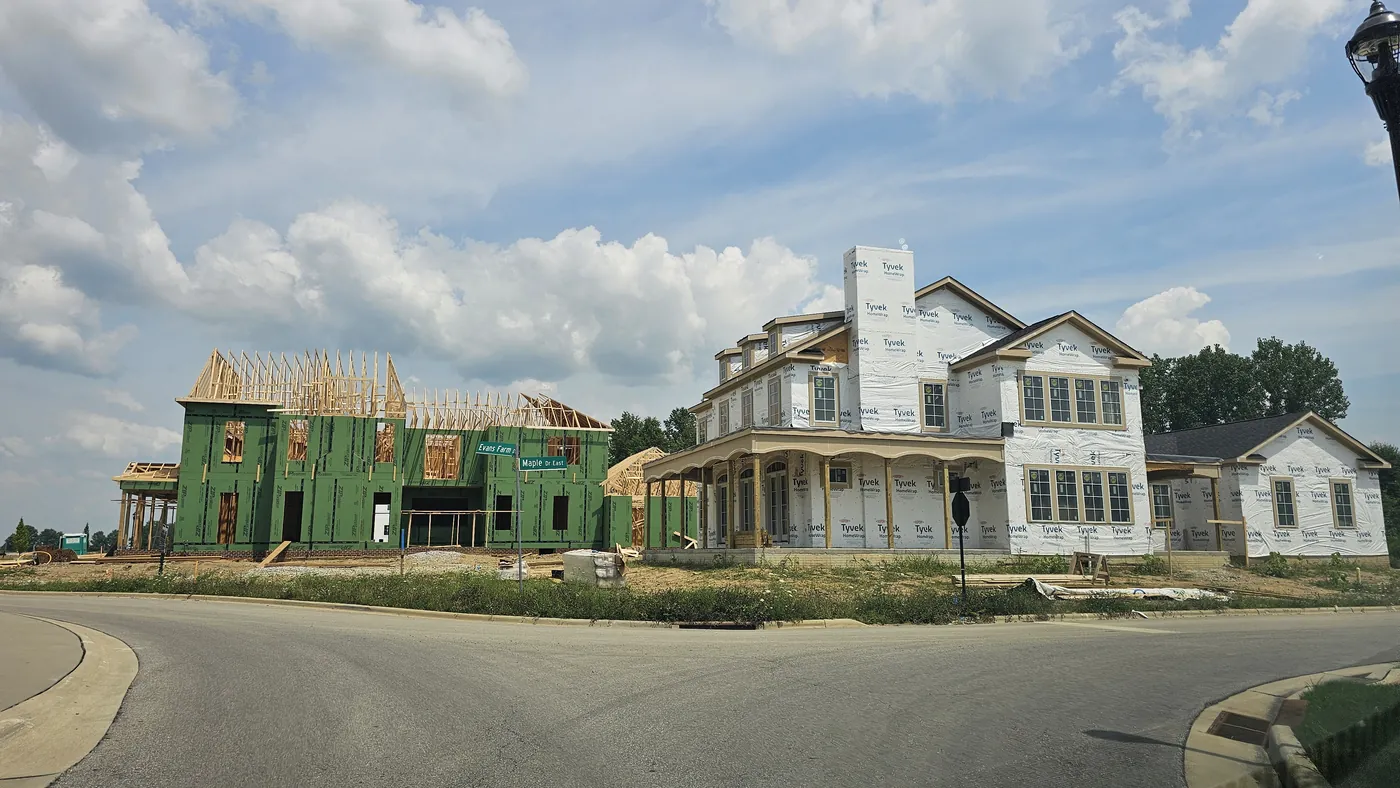
Delaware County grew faster than any county in Ohio over the last Census decade, and it has not slowed much since. Nearly 10,000 homes are already approved or moving through the township pipeline, and the region's planners expect about 180,000 more residents by 2050. None of this is a crisis. It becomes one only if roads, sewers, and schools get planned after the subdivisions instead of ahead of them. Ryan's answer is a public 10-Year Growth Impact Forecast, updated every year, so every decision gets made with eyes open.
See what is already approved ↓9,872
Housing units already in the development pipeline in the unincorporated townships at the end of 2025, by the Regional Planning Commission's own count: 7.6 years of building with no new approvals.
DCRPC lot status, December 2025+22.9%
Population growth from 2010 to 2020, the fastest of Ohio's 88 counties. The county has roughly doubled since 2000.
Ohio Legislative Service Commission (archived), September 2022180,000
New residents the regional planning agency expects by 2050, roughly 80 to 85 percent growth. The state's own model is lower; both lines are on the chart below.
MORPC, via 10TV, August 18, 2025The data
Everyone agrees it is coming. They differ on how fast.
The Census counts the past. Two public models project the future: the regional planning agency expects roughly 396,000 residents by 2050, the state model 329,000. The chart shows both, because showing one would pretend to more certainty than anyone has.
County population, 2000 to 2050
Census figures through 2024. The regional line applies MORPC's roughly 85 percent growth projection to the 2020 Census count; the state line is the Ohio Department of Development's published model. The truth is probably between them.
Already in the pipeline, end of 2025
The Regional Planning Commission's own count, 7.6 years of supply at the recent average of 1,298 township permits a year. The roads, sewer capacity, and school seats these homes imply are already owed.
Straight answers
What people ask at the door.
Who decides what gets built?
Mostly the townships. In 15 of the 18 townships, zoning belongs to the local zoning commission and trustees; the county zoning resolution covers only Marlboro, Radnor, and Thompson. The Regional Planning Commission reviews every township rezoning and must send a recommendation, but the township can take it or leave it. Where the county holds real approval power is subdivision platting in the unincorporated townships, and the commissioners control the sewer capacity, county roads, and incentives that make development possible. When a local mayor says the county plan cannot force a township's hand, that is a fair description of Ohio law.
What is already approved?
More than most people think. At the end of 2025 the Regional Planning Commission counted 9,872 housing units in the development pipeline in the unincorporated townships alone: zoned, sketched, platted, or recorded, just not built yet. At the recent pace of about 1,298 township permits a year, that is 7.6 years of construction with no new approvals at all. Countywide, builders pulled between 1,846 and 2,996 residential permits in each of the last several years.
Is growth paying for itself?
Not automatically, and the timing is the trap. A new subdivision delivers permit fees and fresh property tax right away, while the roads, sewer plants, and school seats it requires hit the budget years later. Ohio makes the gap harder to close: the state gives counties no impact-fee statute, and the Ohio Supreme Court's Drees decision in 2012 struck down a township's impact fees as unauthorized taxes. The legal tools that remain are sewer capacity charges, tax increment financing, community reinvestment areas, and New Community Authorities. Using them well requires knowing what is coming, which is the job of the forecast described below.
What is a 10-Year Growth Impact Forecast?
A public document, updated every year, that adds up everything already approved and projects what it means for specific roads, sewer capacity, school enrollment, and emergency response ten years out. The county already collects every ingredient; no office currently combines them. Because it is disclosure rather than regulation, it needs no new authority from the state. It carries no legal force over a township's zoning. Its power is that a township trustee, a school board, and a voter would all be looking at the same numbers before the next approval, and that the county can tie its own sewer, road, and incentive decisions to it.
What happens if nothing changes?
The homes get built either way; the pipeline already exists. What changes is whether anyone is ready. Olentangy schools have been adding 400 to 500 students a year and just passed a $235 million bond for an 18th elementary school and a 5th high school. One county east, land around the Intel site more than doubled in price before local plans caught up. Pressure that arrives before planning gets expensive. Delaware County still has the lead time to do this in the right order.
Where can I check this myself?
The Regional Planning Commission posts its meeting agendas, minutes, development reports, and the lot-status count at regionalplanning.co.delaware.oh.us, and meets at 1610 State Route 521 in Delaware. The county commissioners meet Monday and Thursday mornings at 9:30 in the Historic Courthouse. Every number on this page is linked in the sources at the bottom.
Field notes
What growth did to three other counties.
Delaware County is not the first place to grow fast. Some places sequenced it, some got run over by it, and one bet its whole budget on it.
The cautionary tale, one county east
Licking County, Ohio
When Intel landed, farmland jumped from about $20,000 an acre to $45,000 in a year, nearby home prices climbed more than 50 percent, and school expansions were planned against a factory schedule that then slipped years. A commissioner there said nearly every planning decision for two years had the word Intel attached. Growth without a forecast sets the agenda for you.
The mechanism that works (Indiana)
Carmel, Indiana
Carmel grew from about 30,000 people past 100,000 and stayed drivable by rebuilding intersections ahead of demand: more than 160 roundabouts, the most of any American city, replacing all but a handful of signals. A roundabout runs about a quarter million dollars less to build than a signalized intersection, against $7 to $10 million per mile for new lanes, and an insurance-industry study of 64 Carmel conversions found injury crashes 47 percent lower. Delaware County's engineer is already on this path, headed from 24 roundabouts to 50 by 2030. The job is funding that pace ahead of the driveways.
The concentration risk (Virginia)
Loudoun County, Virginia
Loudoun let data centers carry the budget. They came to generate nearly half the county's tax revenue at about four cents in services per dollar paid, and it worked until the risk concentrated; in March 2025 the county ended by-right approval for new ones. A tax base built on one land use is a bet. Delaware County is being offered the same bet right now, which is why the campaign runs a public data center tracker.
Levers and limits
What a commissioner can actually do about growth.
Growth decisions are split across more governments than most people realize. The first list is the board's real authority. The second names who holds the rest.
The board controls
Sewer capacity. The Regional Sewer District answers to the commissioners, and no subdivision gets built without sewer. Every vote to extend capacity is a quiet decision about where the next thousand homes can go. This is the county's strongest growth lever, and it is barely discussed in public.
Subdivision platting. The county's subdivision regulations govern how land divides in the unincorporated townships, and the Regional Planning Commission approves the plats. Street connections, lot layout, and access standards are set at that table.
Roads and sequencing. The board sets the Engineer's budget and runs the Transportation Improvement District that put the I-71 interchange a year or more ahead of schedule. Building capacity before the driveways arrive is a choice the county gets to make.
Incentives and financing. Tax increment financing, community reinvestment areas, New Community Authority charges, and county bond financing. Ohio's legal toolbox for making growth help pay for its own infrastructure runs through this board.
Publishing what it knows. Nothing in Ohio law stops the county from combining the data it already collects into a public ten-year forecast. Disclosure requires no permission from Columbus.
The board does not control
Township zoning. In 15 of the 18 townships, what gets zoned where is the township's call. The county zoning resolution covers only Marlboro, Radnor, and Thompson. The Regional Planning Commission must be asked for a recommendation on every rezoning; the township decides.
City and village growth. Delaware, Powell, Sunbury, and the portions of Columbus, Dublin, and Westerville inside the county govern their own development, and annexation moves land from township to city rules.
School districts. Enrollment, buildings, and bonds belong to elected school boards. The county's role is to make sure districts can see the housing pipeline coming.
MORPC's federal transportation dollars. The regional commission decides which projects enter the federally funded plan. Delaware County holds seats and a voice there, and holding that voice loudly is part of the job.
Impact fees. Ohio gives counties no statute authorizing them, and the Ohio Supreme Court ruled in 2012 that a township's impact fees were unauthorized taxes. Any candidate promising to make developers pay a growth fee is promising something Ohio law forbids.
The plan
What Ryan will do.
Publish the 10-Year Growth Impact Forecast, every year, in public.
Every approved and pending development, translated into what it means for named corridors, sewer capacity, school enrollment, and emergency response ten years out. It is legal today, because it is disclosure. It binds nobody, by design. It works by making the cost of the next decision visible before the vote instead of after.
Tie the county's own votes to it.
When the board votes on sewer capacity, an incentive, or a road schedule, the forecast's numbers for that decision belong in the same meeting, in writing. The county cannot overrule a township's zoning. It can make sure nobody votes blind, starting with itself.
Build the county's forecasting muscle.
The raw data exists today across the sewer district, the planning commission, the Engineer, and the school districts. What is missing is the function that combines it. That is one or two credentialed planners, or the kind of consultant engagement regional agencies already use, a rounding error against a $163.5 million budget.
If nothing improves
The pipeline builds out either way, nearly 10,000 homes of it. Each one arrives with fees up front and obligations later, and the obligations land on whoever holds office years from now, with no forecast to warn them. By the time a road or a school is visibly behind, the cheap moment to fix it is years gone. Licking County lived this. Delaware County still has the lead time to avoid it.
What better looks like
A county where the growth forecast is public, current, and almost boring. A trustee weighing a rezoning and a family weighing a move read the same ten-year picture, and the county's own sewer, road, and incentive votes cite it every time. Growth keeps coming either way. Done well, it pays its way and lands where the infrastructure is ready.
Sources
Last updated: September 2, 2026
You should not have to take a candidate's word for any of this. Every figure above traces to one of these sources. Found an error? Tell the campaign and we will fix it.
Keep going.
Growth is the issue underneath most of the other eleven.