Issue 2 of 12
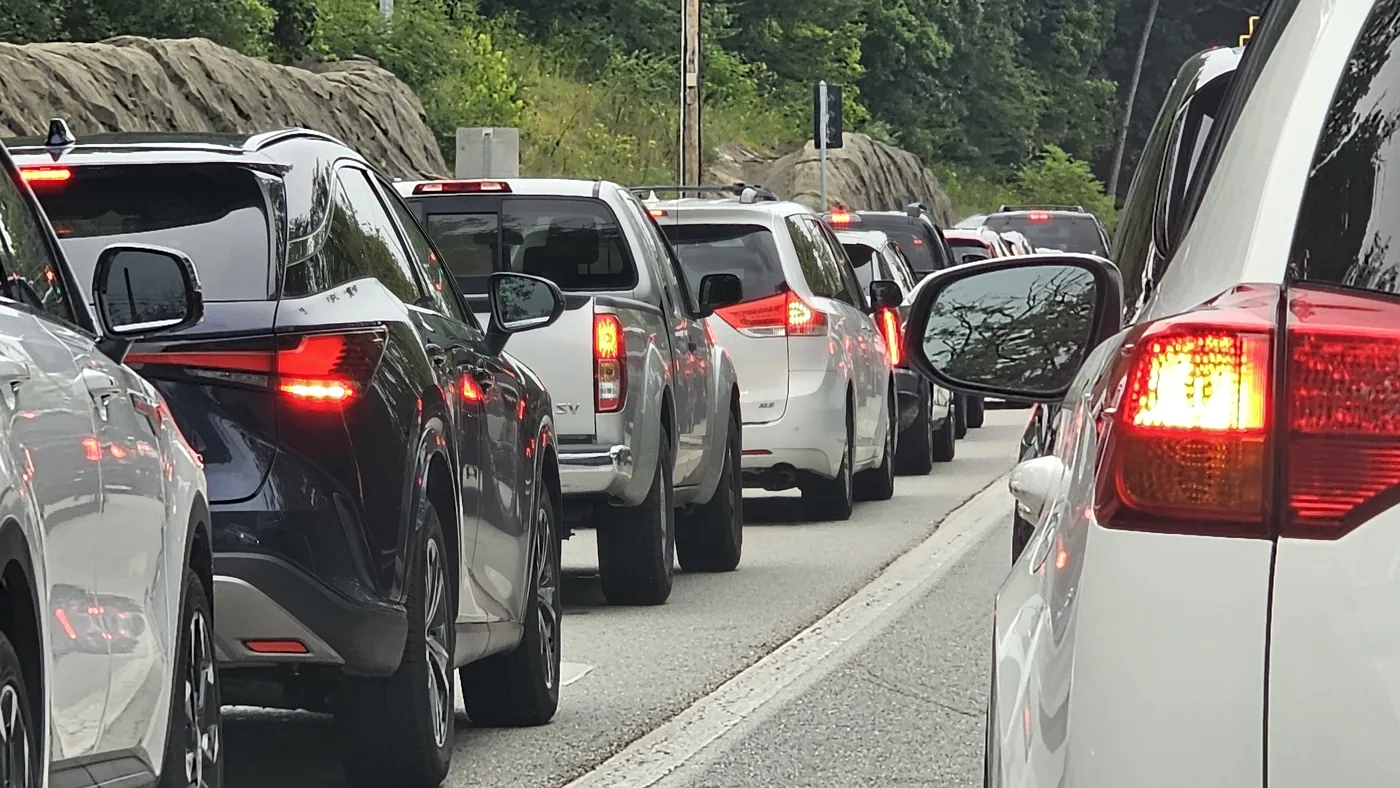
The houses came first. The roads are still catching up.
Most of the roads you sit on every morning are state roads. But the county approved the sewer lines that made those subdivisions possible, and it did that without a public forecast of what the traffic would look like ten years later. Ryan will publish that forecast, and use the tools the county actually has to get roads moving before the driveways do.
See what the county controls ↓$189 million
The full cost of the I-71 interchange and Sunbury Parkway project, built in phases through roughly 2035. Phase 1 broke ground in July 2025 at $31.9 million.
ODOT District 6 news release, July 24, 2025$21 million
The county's largest-ever federal grant, awarded in January 2025 for the East Orange Road railroad underpass. The full project is about $43 million, with construction expected to run 2027 to 2029.
Delaware County announcement, January 16, 202533
The number of project locations ODOT identified along more than 23 miles of the US 23 corridor in its Corridor Action Plan, released February 2025.
ODOT news release (archived), February 12, 2025The data
The commute has held through 25 years of growth.
Delaware County added more than 62,000 people after 2010, and the average trip to work barely moved: 25.3 minutes then, 24.9 now. Whether that holds through the next hundred thousand residents depends on decisions the county is making right now.
Average trip to work, minutes
Census Bureau American Community Survey, 1-year estimates (2020 was not published). County margins of error run about one minute, so the honest read is flat, and consistently 3 to 5 minutes longer than Franklin County.
County population, 1960 to 2050
Census counts and estimates through 2024; projections from the Ohio Department of Development (329K by 2050) and the Delaware County Regional Planning Commission (461K). Either way, every one of those trips lands on the same roads.
The fork
One corridor, two futures.
ODOT measured the rush-hour trip through the 23-mile US 23 corridor at 40 minutes, and projects 75 minutes by 2050 if nothing gets built. Its recommended program, seven projects at $1.4 to $1.9 billion, is designed to bring that trip under 30 minutes. Less than 30, or 75. The gap between those numbers is what showing up in Columbus is for.
Figures from the June 2024 DeWine and ODOT announcement of the US 23 corridor recommendations, linked in the sources below.
Straight answers
What people ask at the door.
Who is actually in charge of the roads?
Four different governments, depending on the road. US 23, US 36 and SR 37, SR 315, and I-71 belong to ODOT, the state. Cities like Delaware, Powell, and Sunbury maintain their own streets, and each township maintains its local roads. County roads and bridges run through the County Engineer, Chris Bauserman, who is elected separately from the commissioners. The board funds the Engineer's office; it does not direct it. A commissioner who wants a state road fixed has to negotiate for it and help pay for it. The decision belongs to Columbus.
What is being built right now?
The big one is the I-71 interchange and Sunbury Parkway, which broke ground in July 2025: a new interchange plus a 4.3-mile east-west connector from Africa Road to Sunbury, built in phases through roughly 2035. Next in line is the East Orange Road underpass, which takes that road beneath the railroad tracks. Right-of-way work is underway, and construction is expected to start in 2027 and finish in 2029. ODOT is also working through a run of SR 315 projects: a new roundabout at Hyatts Road opened in 2025, and a stabilization project between Powell Road and Bunty Station Road closed the route for about 120 days this year.
What is the future of US 23?
ODOT released a US 23 Corridor Action Plan in February 2025 covering 33 project locations along more than 23 miles. It is a plan, not a funded program. Some pieces have money attached and some do not. US 23 gets better in increments over a decade or more, and the pace depends on state funding decisions that no county commissioner votes on. A commissioner's part is to keep showing up in Columbus and to keep the county's project list lined up with the state's instead of competing with it.
What is the future of SR 315?
ODOT has an active program on SR 315. A single-lane roundabout at Hyatts Road, a $2.42 million safety project, was built in 2025. A roughly $4 million stabilization project between Powell Road and Bunty Station Road closed the route for about 120 days starting March 31, 2026, to restore ditches, replace aging culverts, and build retaining walls. A $4.2 million mini roundabout at Jewett Road is programmed for 2026, and corridor pavement maintenance is programmed for 2028. ODOT is sequencing these so the corridor does not face stacked closures. None of these are county projects. The county's job is to plan its own work and the townships' around that schedule.
What happens if nothing changes?
The county's own planning commission projects Delaware County passing 400,000 people in the 2040s. The building permits are already issued. If roads keep getting planned after the subdivisions are approved instead of alongside them, every new development makes the commute worse for people who have lived here twenty years. The county does not run out of road capacity all at once. It runs out one intersection at a time, and the fix costs far more once the houses are there.
Where can I check this myself?
The county commissioners meet Monday and Thursday mornings at 9:30 in the Historic Courthouse at 91 N. Sandusky Street in Delaware. Meetings are livestreamed and archived. The County Engineer publishes the road and bridge program. ODOT publishes its project list and the US 23 Corridor Action Plan. Every source used on this page is linked at the bottom, with dates.
The big question up north
What about the US 23 to I-71 connector?
In 2025 the legislature ordered ODOT to study a new freeway link between US 23 and I-71. Sixteen possible routes were narrowed to five in February 2026, all in Morrow County farmland north of Ashley. Every route through Delaware County was eliminated over impacts to Delaware State Park and the floodplain. A preferred route goes to the legislature by October 1, 2026. It is a study, not a construction project, and ODOT's own corridor analysis found that fixing the existing US 23 saves drivers more time than a new freeway would. Ryan's focus is the work that is already funded on US 23: put the county's weight behind getting it built, and keep publishing what the study means for Delaware County as it moves.
Read the state's study for yourselfLevers and limits
What a commissioner can actually do.
Most of what shapes your commute belongs to somebody other than the county. The first list is what the board of commissioners controls. The second names who holds the rest.
The board controls
The Transportation Improvement District. The commissioners created it in May 2018. It exists to move road projects faster through partnerships and shared design work, and the County Engineer's office credits it with putting the I-71 interchange and Sunbury Parkway a year or more ahead of schedule. This is the most underused tool the county has.
The road and bridge budget. The board sets what the County Engineer's office gets. The 2026 budget increased roadway and bridge investment by about $2.16 million, an 8.5 percent bump.
The permissive motor vehicle license tax. Under Ohio law, counties can enact these to fund roads. Candidates rarely bring it up, because it is a tax.
Subdivision platting. The board adopts the county subdivision regulations that govern how land is divided in the unincorporated townships. Street layout, connectivity, and where the traffic goes are decided at that table.
Sewer capacity. The Regional Sewer District runs 531 miles of line serving more than 111,000 people, and it reports to the commissioners. You cannot build a subdivision where there is no sewer. Every decision to extend capacity is a decision about where tomorrow's traffic gets generated.
Convening power. Eighteen townships, three cities, four villages, four school districts, ODOT, and MORPC all plan separately. The county is the only body positioned to get them in one room around one shared forecast.
The board does not control
US 23, US 36 and SR 37, SR 315, and I-71. These are ODOT's. The county advocates and sometimes co-funds. It does not decide.
County roads and bridges, directly. The County Engineer, Chris Bauserman, is independently elected. The board decides his office's budget, and that is where its authority ends.
Township roads. Each of the 18 townships maintains its own, with its own trustees and its own levies.
City streets. Delaware, Powell, and Sunbury are home-rule municipalities.
Township zoning. In 15 of the 18 townships, zoning belongs to the township. The county zoning resolution applies only in Marlboro, Radnor, and Thompson. Where a development goes is usually not a county decision. Whether it can get sewer often is.
Impact fees. Ohio law does not allow counties to charge them. The Ohio Supreme Court struck down a township impact fee in 2012. The legal alternatives are sewer capacity charges, New Community Authority charges, and TIFs.
The plan
What Ryan will do.
Publish a 10-Year Growth Impact Forecast that includes traffic.
Every year, in public, showing what the approved and pending development means for specific corridors and intersections ten years out. Right now, 18 townships and every city plan separately and no one publishes the combined picture. If the forecast says an intersection fails in 2032, the county starts working on it in 2027 instead of 2033.
Use the Transportation Improvement District harder.
It already proved it works on the Sunbury Parkway interchange. It should have a standing project pipeline and an annual public report. So far the county has saved it for the biggest project of the decade.
Line up sewer decisions with road capacity.
When the board votes to extend sewer capacity, the traffic impact of what that capacity makes possible should be on the table in the same meeting, in writing. That is a different way for the board to do business, and it requires no one's permission but the board's own.
If nothing improves
Nothing about this gets easier by waiting. The permits are already issued and the houses are already framed. Every year the county approves growth without a public traffic forecast, the fix gets more expensive and the commute gets longer for people who were here first. Roads built after the fact cost more, take longer, and tear up neighborhoods that had already settled.
What better looks like
A county where you can look up, on a public website, what your intersection is projected to look like in ten years, and see the project that addresses it already scheduled. Where the road work starts before the subdivision opens instead of five years after. Where growth and the roads that carry it get planned in the same room, on the same timeline, in front of you.
Sources
Last updated: September 2, 2026
You should not have to take a candidate's word for any of this. Every figure above traces to one of these sources. Found an error? Tell the campaign and we will fix it.
Keep going.
Traffic connects to almost everything else on the ballot this year.